Ketamine-Assisted Psychotherapy: Healing Through Expanded Awareness
By Laura Burnett-Tubbs, MA, LPC
There are moments in therapy when words are enough.
And there are moments when they aren't.
For many people living with depression, trauma, anxiety, or emotional patterns that have existed for decades, insight alone isn't always enough to create lasting change. You may know exactly why you react the way you do, understand where your pain comes from, and still find yourself repeating the same patterns.
This is one of the reasons I became passionate about Ketamine-Assisted Psychotherapy (KAP).
Ketamine is not a magic cure. It doesn't "fix" people. Instead, it creates a unique state of consciousness where the mind becomes more flexible, the nervous system becomes less defended, and the rigid stories we have about ourselves can soften enough for something new to emerge.
As a therapist grounded in mindfulness, Internal Family Systems (IFS), body-centered psychotherapy, attachment theory, and transpersonal psychology, I view ketamine as a catalyst rather than the treatment itself. The medicine opens the door. Therapy helps you walk through it.
What Is Ketamine?
Ketamine was first developed in the 1960s as an anesthetic and has been used safely in hospitals around the world for decades. Over the past twenty years, researchers began noticing something remarkable: at much lower doses than those used in surgery, ketamine often produced rapid improvements in depression—even in people who had not responded to multiple antidepressants.
Today, Ketamine-Assisted Psychotherapy combines carefully prescribed ketamine with psychotherapy before, during, and after the medicine experience.
Unlike taking medication at home simply to reduce symptoms, KAP intentionally uses the altered state as an opportunity for emotional healing, nervous system repair, and psychological insight.
What Mental Health Conditions Does Ketamine Help?
Research has been strongest for treatment-resistant depression, but the evidence continues to expand.
Studies suggest ketamine may be beneficial for:
Treatment-resistant depression
Major depressive disorder
Suicidal thoughts requiring rapid intervention
PTSD and complex trauma
Anxiety disorders
Obsessive-Compulsive Disorder (OCD)
Chronic pain conditions with psychological components
End-of-life anxiety
Alcohol use disorder and certain substance use disorders when combined with psychotherapy
Perhaps what excites me most isn't simply symptom reduction.
It's witnessing clients reconnect with curiosity, self-compassion, creativity, and hope after years of feeling emotionally stuck.
Why Is Ketamine Considered Psychedelic Therapy?
Technically speaking, ketamine is not a classic psychedelic.
Classic psychedelics like psilocybin, LSD, and mescaline primarily work through serotonin (5-HT2A) receptors.
Ketamine primarily works by blocking NMDA glutamate receptors and is classified as a dissociative anesthetic.
So why is it often grouped with psychedelic therapy?
Because the subjective experience often shares many of the same therapeutic qualities:
expanded states of consciousness
reduced activity of the brain's Default Mode Network
increased psychological flexibility
mystical or transcendent experiences
shifts in perspective
lasting changes in meaning-making
In other words, while the pharmacology differs, the therapeutic process often overlaps considerably.
Many researchers now refer to ketamine as part of the broader field of psychedelic-assisted psychotherapy, acknowledging that what matters clinically is less about the drug category and more about how altered states facilitate healing.
What Does Ketamine Feel Like?
This is one of the questions I hear most often.
The honest answer is that every experience is different.
Some people feel as though they are floating.
Others describe becoming incredibly light—as if gravity has loosened its grip.
Many people report that the constant mental chatter quiets for the first time in years.
Instead of thinking about life, they begin experiencing it.
At moderate therapeutic doses, people often notice:
time feels different
the boundaries of the body soften
music becomes vividly emotional
emotions arise without overwhelming the nervous system
memories appear from surprising angles
insights arrive without effort
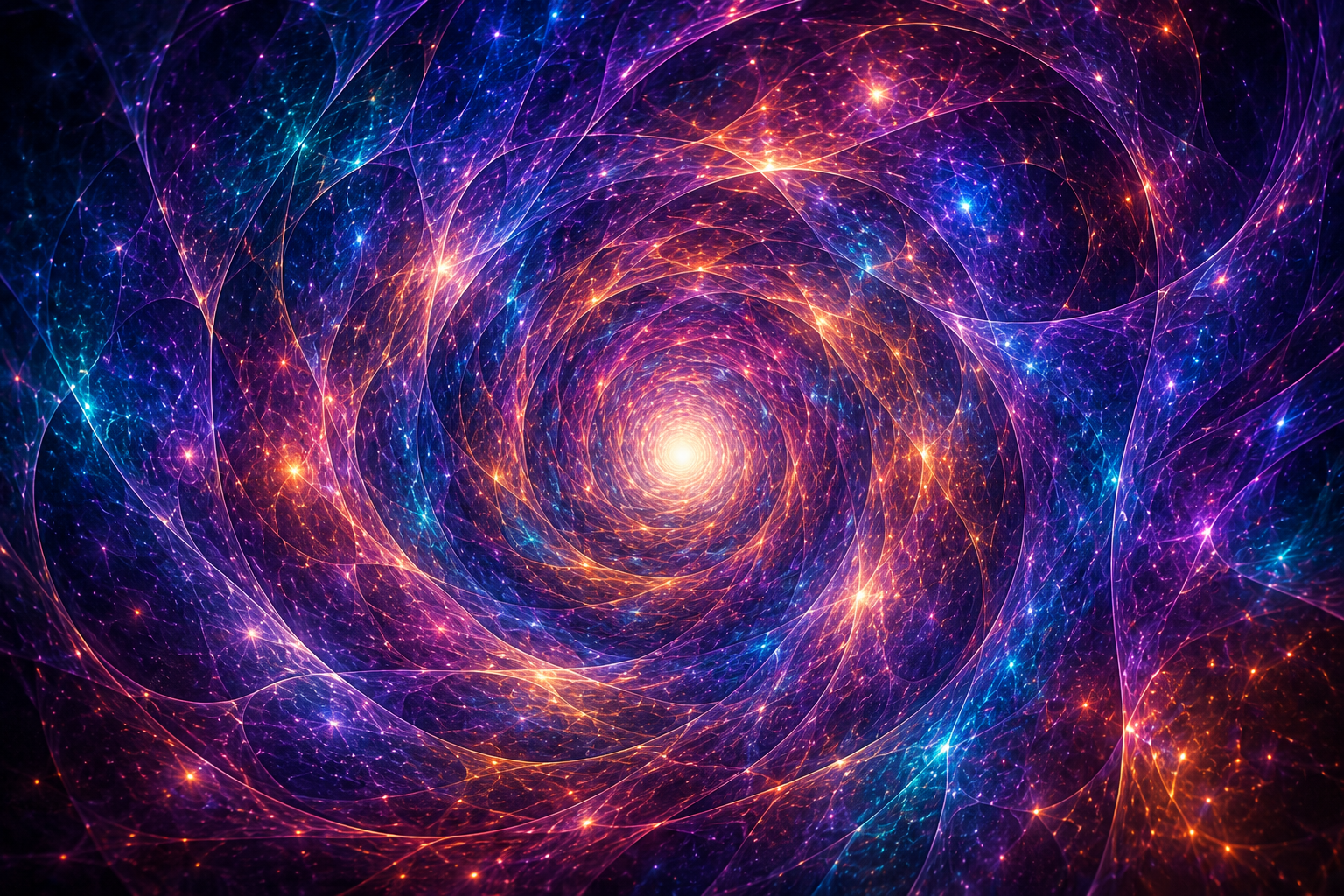
Many people describe moving through a tunnel.
Not a frightening tunnel—but one made of color, geometry, light, and movement.
Imagine floating slowly through an infinite cathedral constructed from shifting stained glass.
Or drifting through an endless landscape where patterns fold into themselves like kaleidoscopes.
Some people feel they are traveling through space.
Others feel as though they are moving inward—journeying through layers of consciousness rather than physical distance.
Visuals may include:
flowing geometric patterns
luminous colors
abstract landscapes
dreamlike architecture
waves of light
dissolving into spaciousness
I offer an eye mask in Ketamine sessions because the internal experience often becomes richer than the external environment.
Some people experience very little imagery at all.
Neither experience is better.
The healing doesn't depend on having spectacular visuals.
Often the deepest work happens quietly.
Why Dissociation Can Become Therapeutic
Normally we think of dissociation as something negative.
Trauma often disconnects us from ourselves.
Ketamine creates a very different kind of dissociation.
Instead of disconnecting because the nervous system is overwhelmed, ketamine temporarily loosens our identification with habitual thoughts and protective defenses.
Clients often say things like:
"I could finally look at my trauma without becoming consumed by it."
Or
"For the first time, I realized my depression wasn't who I am."
From an IFS perspective, protective parts often soften enough that exiled emotions can be approached with greater compassion and curiosity.
Rather than being trapped inside the story, people are able to witness it.
That shift alone can be profoundly healing.
Neuroplasticity: Why Ketamine Creates an Opportunity for Change
One of the most exciting areas of ketamine research involves neuroplasticity.
Neuroplasticity refers to the brain's remarkable ability to form new neural connections throughout life.
Chronic depression and trauma often create deeply worn neural pathways—our brains become incredibly efficient at repeating the same emotional responses, beliefs, and behaviors.
Ketamine appears to rapidly increase the release of Brain-Derived Neurotrophic Factor (BDNF), stimulate synaptogenesis (the growth of new synaptic connections), and enhance communication between brain regions.
You might think of it like walking through a forest.
If you've walked the same trail for twenty years, the path becomes deeply worn.
Ketamine temporarily allows the forest floor to soften so that new paths become possible.
But possibility is not permanence.
This is exactly why psychotherapy matters.
Without intentional integration, the brain often returns to the old trail.
With therapy, mindfulness, journaling, and behavioral change, those new pathways become stronger over time.
Dosing: Finding the Therapeutic Window
Ketamine dosing is individualized and always determined by the prescribing medical provider.
The goal is not to give "more medicine."
The goal is to find the therapeutic window.
At lower doses, people may experience:
relaxation
emotional openness
mild perceptual changes
At moderate doses commonly used in KAP:
deeper inward focus
reduced ego identification
vivid imagery
altered perception of time and space
increased access to unconscious material
Higher doses move closer toward anesthesia and generally are not the goal in psychotherapy.
More is not necessarily better.
The ideal dose allows enough altered awareness for therapeutic work while maintaining emotional safety.
The Three Phases of Ketamine-Assisted Psychotherapy
Phase One: Preparation
Preparation is one of the most important parts of treatment.
Long before any medicine is administered, we spend time building trust, understanding your history, identifying intentions, discussing fears, and developing resources for emotional regulation.
This phase may include:
creating a safe therapeutic relationship
reviewing medical history with the prescribing provider
discussing expectations
mindfulness practices
identifying protective parts
nervous system regulation
intention setting (rather than rigid expectations)
Preparation helps create the psychological container for meaningful healing.
Phase Two: The Ketamine Session
On the day of treatment, the therapy room is intentionally designed to support inward exploration.
Most people wear an eye mask.
Music is carefully selected.
The environment remains quiet, calm, and supportive.
As the medicine begins working, conversation often becomes minimal.
Unlike traditional talk therapy, the focus shifts toward allowing experience rather than analyzing it.
The therapist remains present throughout, helping create safety while trusting the client's inner healing intelligence.
There is nothing you need to accomplish.
Nothing to force.
No perfect journey.
Healing often unfolds naturally when we stop trying to control it.
Phase Three: Integration
If the medicine opens the door, integration is where lasting change happens.
Within the days following treatment, the brain appears especially receptive to learning and behavioral change.
This is the window we want to use intentionally.
Integration sessions may include:
processing insights
identifying emotional themes
Internal Family Systems work
somatic therapy
EMDR-informed approaches (when appropriate)
mindfulness practices
journaling
creative expression
developing concrete behavioral changes
The question becomes:
"How does this experience want to change the way I live?"
Without integration, profound experiences can fade into interesting memories.
With integration, they become lasting transformation.
Is Ketamine Right for Everyone?
No.
Ketamine is not appropriate for everyone and requires careful medical screening.
Certain cardiovascular conditions, active psychosis, uncontrolled mania, pregnancy, and some substance use concerns may make ketamine inappropriate or require additional evaluation.
A thorough assessment by both a qualified prescriber and an experienced therapist is essential before beginning treatment.
My Perspective as a Therapist
One of the greatest gifts I witness in Ketamine-Assisted Psychotherapy isn't simply symptom reduction. It's remembering. People remember that they are more than their anxiety. More than their depression. More than their trauma. More than the stories they've carried for decades.
Again and again, I watch clients reconnect with something that has always been there beneath the protective layers—a deeper sense of wholeness, compassion, and possibility.
As someone deeply influenced by mindfulness, transpersonal psychology, and Internal Family Systems, I don't believe healing means becoming someone new.
I believe healing is remembering who you were before life convinced you that you had to become someone else.
Ketamine doesn't create that wisdom.
It simply helps clear enough space for you to encounter it.
Learn More
If you're curious about whether Ketamine-Assisted Psychotherapy may be a good fit for you, I'd be honored to help you explore your options. Healing doesn't happen because of a medicine alone—it happens through the relationship you build with yourself, supported by a safe therapeutic container and thoughtful integration.
References
Feder, A., et al. (2021). Efficacy of Intravenous Ketamine for PTSD. American Journal of Psychiatry, 178(2), 193–202. https://doi.org/10.1176/appi.ajp.2020.20050596
Krystal, J. H., et al. (2019). Ketamine and the potential role for rapid-acting antidepressants. Nature Reviews Drug Discovery, 18, 611–629. https://www.nature.com/articles/s41573-019-0013-9
Duman, R. S., & Aghajanian, G. K. (2012). Synaptic dysfunction in depression: Potential therapeutic targets. Science, 338(6103), 68–72. https://www.science.org/doi/10.1126/science.1222939
Berman, R. M., et al. (2000). Antidepressant effects of ketamine in depressed patients. Biological Psychiatry, 47(4), 351–354. https://doi.org/10.1016/S0006-3223(99)00230-9
Wilkinson, S. T., & Sanacora, G. (2019). Considerations on the off-label use of ketamine. JAMA, 321(21), 2105–2106. https://jamanetwork.com/journals/jama/fullarticle/2734677
Dakwar, E., et al. (2019). Ketamine-assisted psychotherapy for alcohol use disorder: A randomized clinical trial. American Journal of Psychiatry, 176(11), 923–930.